
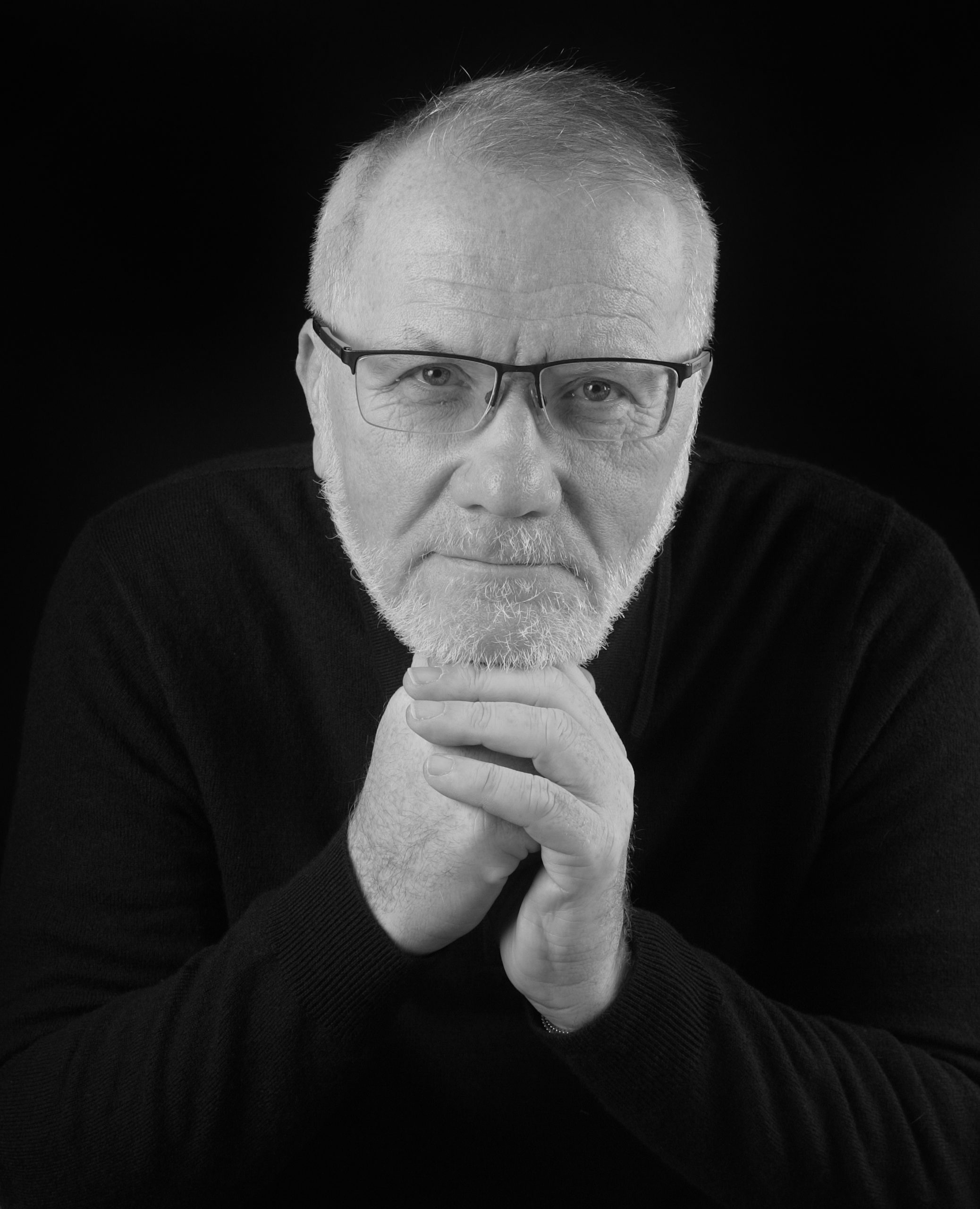
Ken Davies, Conference Programme Director at Battery & Energy Storage Tech Europe, argues that energy storage and advanced batteries are essential for the strategic autonomy of the continent. In this interview, Davies explains how this new show, organised by Fira de Barcelona in collaboration with 104-Media, aspires to become the great meeting point for industry, researchers and administrations, at a key moment to strengthen European technological sovereignty and accelerate its energy transition.
Why has energy storage become such a crucial issue for Europe?
Energy plays a fundamental role in advanced societies, as we could see during the major blackout experienced several months ago and, more recently, in the effects of the situation in the Middle East. The key is not only to guarantee the supply, which is also true, but to build a robust and autonomous system. In this context, which coincides with an accelerated energy transition and a landscape of growing geopolitical threats, having our own technologies is essential to ensure our competitiveness and independence. We are talking about energy storage for different uses, more industrial, which allows us to absorb peaks in renewable generation and compensate for the volatility of the energy market. But we are also referring to advanced batteries in strategic applications for our economies. Europe must position itself and play a leading role in this field.
Why is European strategic autonomy so important in this area?
Recent years have shown that dependence on third countries on critical raw materials, battery components or industrial technology can lead to a bottleneck with a massive economic impact. For this reason, Europe has decided to promote a complete value chain, which includes everything from the extraction and processing of materials to recycling, including the manufacture of cells and their integration into industrial applications. Having a solid value chain is essential to reduce supply risks and shield our competitiveness. Basically, we are talking about industrial sovereignty: whoever controls the batteries controls a large part of the electrified economy.
What emerging applications are driving the growth of the sector, beyond the electric car?
The electric vehicle was the gateway, and in fact this is demonstrated by the enormous number of related events. We, with Battery & ES Tech Europe, have decided to focus on areas that explain the great expansion of the sector and its rapid economic growth at European level. We are talking about professional drones, collaborative robotics, autonomous agricultural machinery, advanced medical systems, automated logistics, data centres associated with Artificial Intelligence, light maritime mobility, as well as railway and aerospace solutions. All of these applications require safe, efficient, and energy-dense batteries. This range opens up new opportunities and Europe can be a leader, especially in strategic and high value-added sectors, avoiding excessive dependence on third parties such as Asians or the United States.
Specifically, what opportunities are you referring to?
Storage and batteries will define the European economy in the 21st century. The industrial storage segment alone will be around 150,000 million euros in the next decade, which places it at the level of the large global technology markets. Europe is already moving towards more than 1,000 GWh of production capacity by 2030, consolidating its position as the world’s second-largest producer. This implies the creation of qualified employment, the attraction of investment in R&D and the strengthening of the industrial fabric in key sectors for the energy transition, digitalisation and security of supply. For the European economy, this sector is not just an opportunity: it is strategic, insofar as it will represent one of its industrial engines in the future.
What differentiates advanced batteries from conventional ones?
Advanced batteries are true engineering systems. We’re not just talking about chemical improvements: they integrate advanced materials, power electronics, software, sensors, and sophisticated thermal design. Thanks to this, they offer high energy density, higher efficiency even under extreme conditions, a long service life and much higher safety standards. In sectors such as heavy machinery, medical equipment or satellite technology, to give a few specific examples, the battery is no longer just another component: it defines the product, as it conditions its performance, its autonomy, its certifications and its commercial viability.
In this context, what role will Battery & Energy Storage Tech Europe 2026 play?
The show, which will be held on 8 and 9 September at Fira de Barcelona, was created precisely to articulate this new European energy storage ecosystem. Our goal is to become an industrial platform that brings together the main players, both at the business level and from research centers, public administrations and strategic associations. For two days, the sector as a whole will be able to share innovation, visions of the future and business opportunities, which will make us a meeting point that will promote alliances, accelerate projects and strengthen European leadership in this field. We believe that an event like Battery & ES Tech Europe is very necessary at a time when our continent seeks to consolidate its energy sovereignty.
Barcelona, 24 March 2026
